


Vermont Artists and the Changing Landscape of AI
 While artificial intelligence (AI) opens up new possibilities for artists, it also presents significant challenges related to copyright, creativity, job security, and ethics. In our role as advocates for the needs of artists, we were interested to take the pulse of Vermont creatives on this fast-changing technology to get a sense of how we can support artists and organizations—whether through policy advocacy or professional development. So we asked!
In our survey of Vermont artists that recently closed, we asked five open-ended questions, specifically about generative AI, which is the type of AI that uses prompts to create new content in the form of text, images, audio, and video. Responses were anonymous.
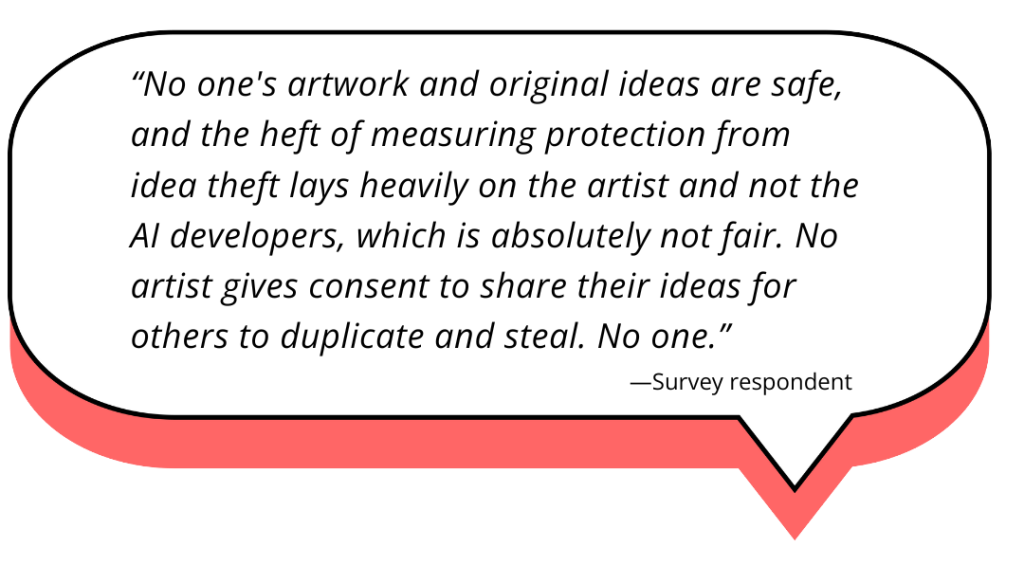
Many of the 42 survey respondents expressed significant concerns about AI — 88% worried about at least one aspect of the technology. Concerns included uncompensated copyright infringement, the environmental impact, the potential devaluation of human artistry, and the negative impacts on artists’ compensation, among other things.
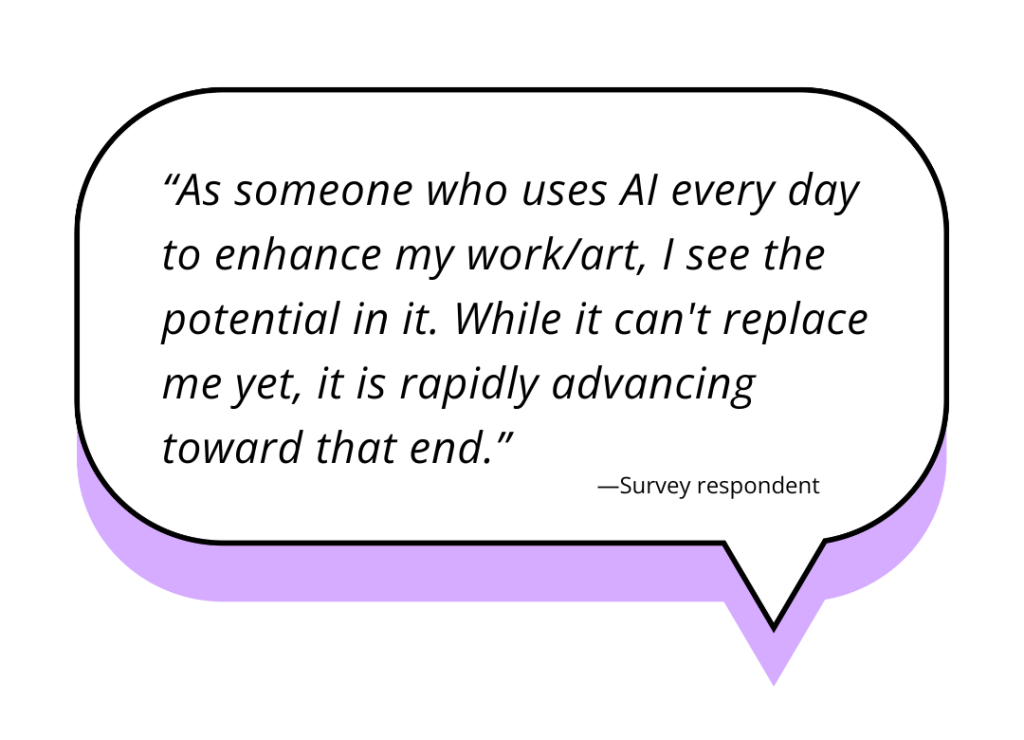
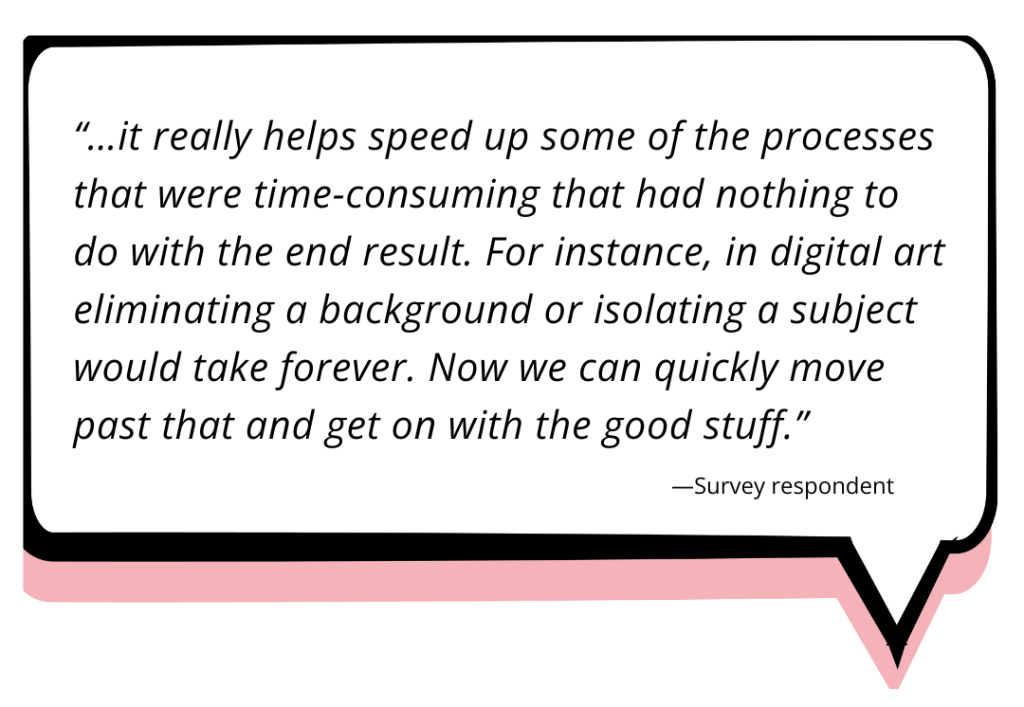
When considering the potential benefits of AI, survey responses varied, with some artists expressing that they would never consider using AI in their own artistic practice, while others indicated excitement for potential uses of the technology, such as drafting, brainstorming, visualizing ideas, and project management. While some find AI helpful for certain tasks, the prevailing sentiment was one of apprehension regarding the technology’s effects on their profession and the world as a whole.
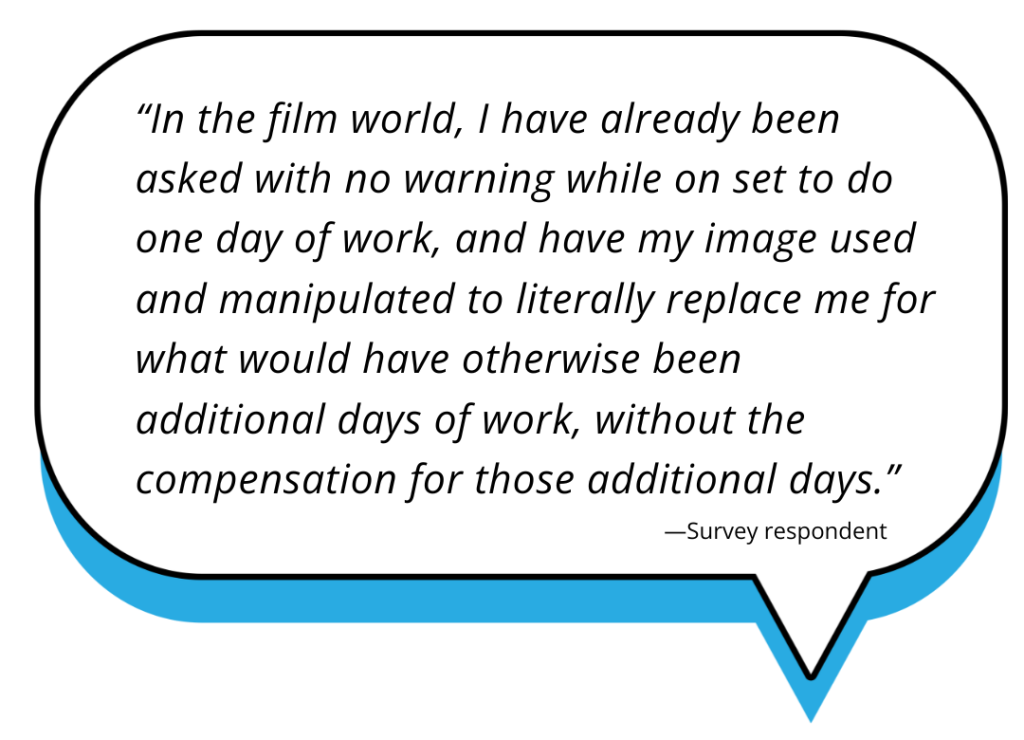
When asked specifically if generative AI is impacting their ability to be compensated for their work, artists talked about AI-generated books flooding the self-publishing market, AI video manipulation in film replacing an actor, and AI reinforcing the cultural belief that “art is easy,” diluting the perceived value of art.
One respondent was aware of generative AI using their content to train AI models, specifically noting that one of their images has been “floating around the internet…with zero recognition of the artist (me). Also have had other images being used in a print on demand business where they were letting folks order it on various AI generated backgrounds!”
It is clear that we are at the beginning of this new and evolving technology. While there is no one story of how AI affects Vermont artists, many artists are advocating for clearer regulations, better ethical guidelines, and more equitable frameworks to address these concerns.
Like all technologies, AI has tremendous potential and tremendous risk. Reasonable regulations can protect artists and consumers, while allowing both the technology and the arts to innovate.
The Vermont Arts Council will continue to monitor developments in the field and is exploring ways to support the arts community with generative AI. And we’d love to hear from you! If you have some thoughts about AI that you’d like to share, please email us at [email protected].
Learn More
Listen to the Jan. 7, 2025, episode of Vermont Edition (“Sen. Peter Welch wants to better regulate generative AI”) on Vermont Public.
“…[W]e’re incredibly proud in Vermont of our creative economy, in our artists, our musicians: Noah [Kahan], Phish, Grace Potter and their rights to be compensated for their work, especially when they’re Vermonters, I want to stand up for that.” — Sen. Peter Welch on his bill to protect creative work from training AI.
Welch Leads Bill to Protect Musicians, Artists, and Creators from Unauthorized A.I. Training